Serbia: Student List forms government talks after landslide
The movement won 53% of the vote in Sunday's election, forcing Aleksandar Vučić to end his 14-year rule.
By Mariam Darwish ·
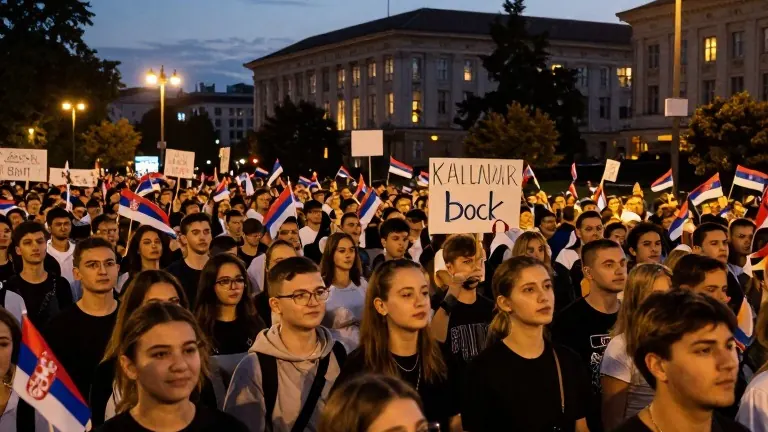
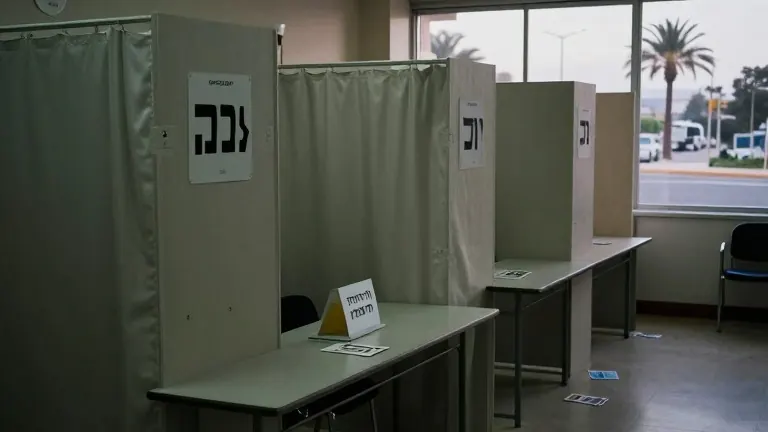
Serbia's Student List began preparations for government formation talks on Monday following a historic victory in Sunday's parliamentary elections.
The movement secured 53% of the vote, earning 141 seats in the 250-seat parliament. Aleksandar Vučić's Serbian Progressive Party received 39%, resulting in 103 seats. The remaining seats were distributed among national minority party lists. Vučić conceded defeat late Sunday, ending his dominance of Serbian politics after two years of anti-government protests.
The Student List operates without a formal hierarchy or single leader. Its candidates include academics, actors, farmers, and students. Ilija Srdanović, a cardiologist, headed the candidate list. Dejan Šoškić, a former central bank governor, and Radomir Saičić, a chemistry professor at Belgrade University, are prominent figures in the movement. It remains unclear who will be appointed prime minister and cabinet members as the group prioritizes collective decision-making.
The movement faces a government staffed by civil servants loyal to the outgoing regime. Ana Mirković, a university educationist and Student List candidate, stated that the group's first priority is the social and psychological detoxification of the country. She described the election result as taking on a historic debt to the people rather than gaining power and privileges.
The Student List platform pledges to fight corruption and restore the rule of law. It proposes creating an independent police unit accountable to prosecutors rather than the interior ministry. The movement also aims to ban party loyalists from state-owned companies and to subject major state infrastructure contracts to public scrutiny by new independent bodies. Mirković said the new government would dismantle a system of intimidation by opening up the media and ending pressure on public-sector workers.
Vučić, who maintained close ties with Russia, blamed his party's defeat on direct support from European countries and the US. He cited the US deep state as a factor in the loss. The Kremlin said on Monday that it hopes the new leaders understand that cooperation with Russia is in Serbia's interests. Analyst Dušan Vučićević noted that the movement insisted on addressing domestic political issues first, specifically the dismantling of institutions from the national to the local level.
International leaders offered support to the new leaders. Ukrainian President Volodymyr Zelenskyy called the victory a new chapter in the country's history and wished Serbia success in its European development. German Chancellor Friedrich Merz stated that Berlin would actively support Serbia's European path, praising the students' demand for the rule of law and fundamental freedoms. Nikola Burazer, a programme director at the Centre for Contemporary Politics, said the movement's decision-making process needs to be sped up now that the initial shock of the victory has passed.
Source: The Guardian